Black Tish emerged from the Brussels underground in 1988 — a collision of industrial process, electronic architecture, and metal structure at a moment when those worlds had not yet learned to speak to each other.
Using cutting-edge sampling techniques, synthesizer loops, and metal-style guitars, the band forged a heavy rock/electronica fusion that bridged the pure experimental nature of Throbbing Gristle and Einstürzende Neubauten with the comparatively more accessible territory of Ministry and Nine Inch Nails — before either had fully arrived.
Behind the band: Bob Coecke — physicist, mathematician, and pioneer of categorical quantum mechanics — whose parallel career in science has always shared the same obsession as the music: the structure beneath the surface.
Now, decades later, Black Tish continues — with quantum computers as instruments, diagrammatic mathematics as composition, and the same refusal to separate thought from sound.
“The missing link between the pure experimental nature of Throbbing Gristle and Einstürzende Neubauten, and the comparatively more accessible Ministry and Nine Inch Nails.”
— PressBlack Tish forms in Brussels. Sampling, synthesizers, and metal guitars assembled into something that has no name yet. Industrial music pioneer territory.
Recording and performing through the late 80s and 90s. Computer-aided musical composition taught at Brussels art schools. The science and the music run in parallel, feeding each other.
Seminars in Brussels and Chicago on how quantum entanglement could reshape musical performance and composition. The audience was small. The ideas were not.
Black Tish ceases to exist. Bob Coecke moves to Oxford. The music stops. The band is not dissolved — it simply isn't.
The old music returns — solo, private, unreleased. Small performances across Beijing, Istanbul, Brussels and Oxford. Not a resurrection. A haunting. Nothing new is created, but the sound refuses to stay buried.
Black Tish returns. New lineup, new city, new instruments — including one that runs on a quantum computer. The band that pioneered industrial music now pioneers quantum music.
Under the pseudonym Quanthoven, co-composes the first ever piece of music generated by a quantum computer. The long-dormant idea finally has its instrument.
Quantum Synth premieres at Wacken Open Air — the world's largest metal festival. Industrial meets quantum physics on the biggest stage in heavy music.
Quantum Guitar premieres at the Edinburgh Art Festival. Guitar strings coupled to a quantum computer — real-time superposition as performance. A new instrument enters the world.
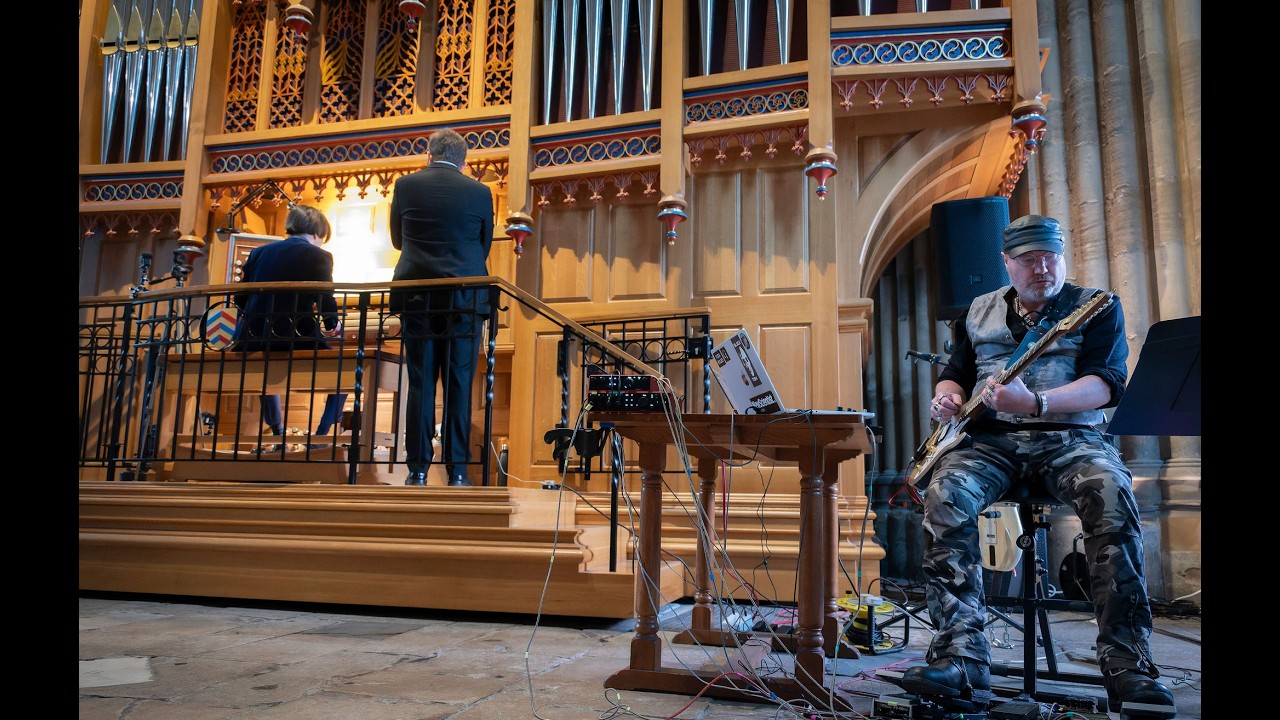
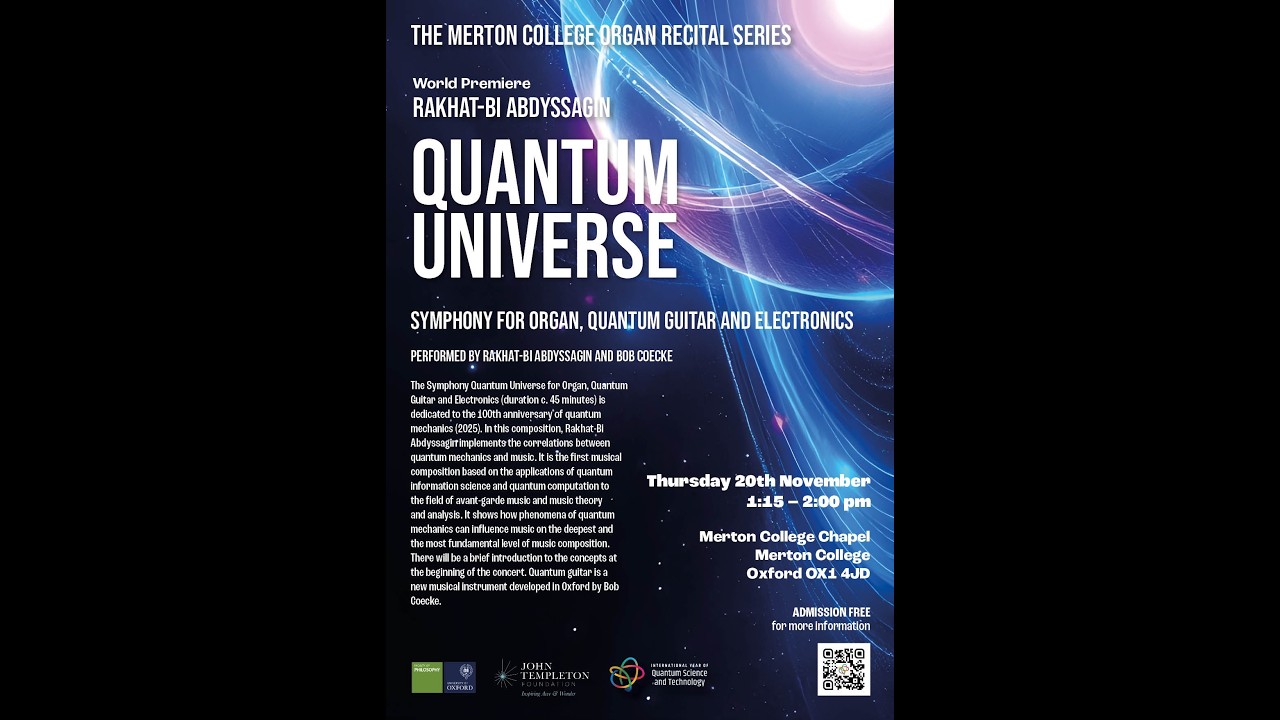
Performances at Holywell Music Room and Merton College Chapel — Oxford's oldest concert hall and one of its most ancient sacred spaces — marking 100 years of quantum mechanics. Concerts released on YouTube.
Quantum Guitar takes the stage at Wacken Open Air. The world's largest metal festival meets the world's most quantum instrument.
The quantum guitar and its musical language are not only performed — they are theorised.
Signal exchange. Black Tish in dialogue with other artists and entities at the edge of sound.
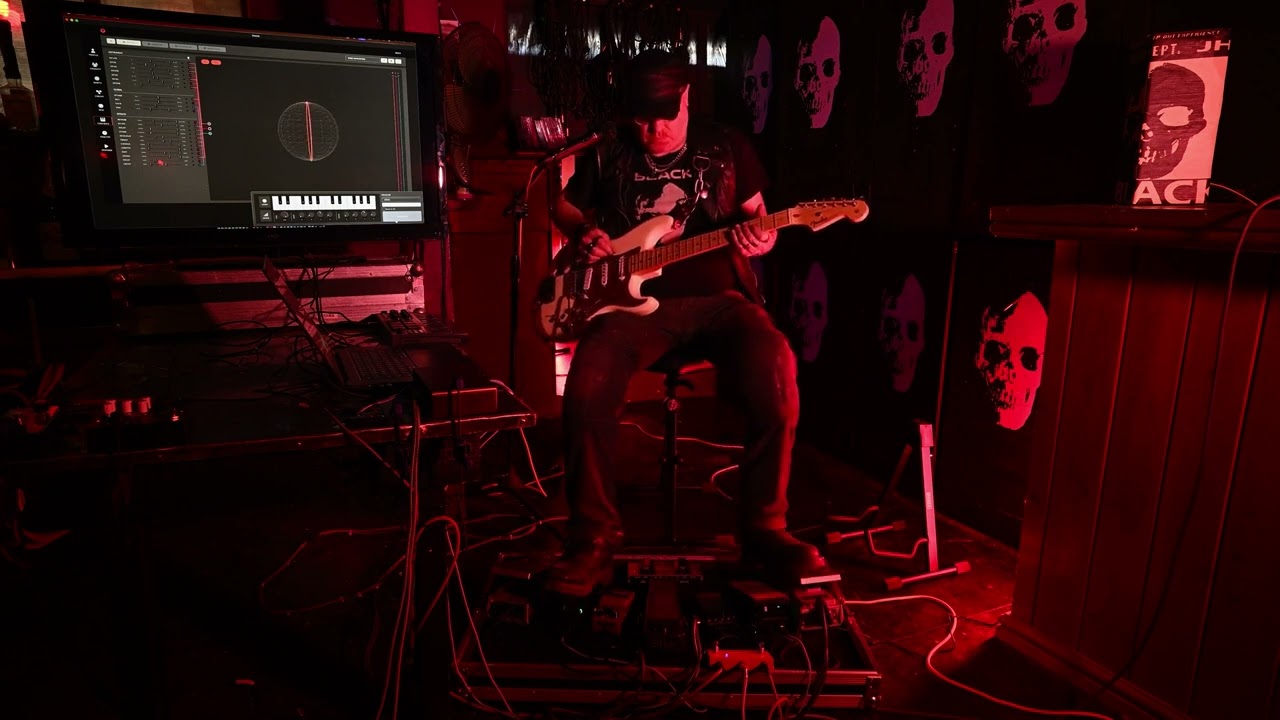
Guitar strings coupled to a quantum computer. Superposition states drive real-time harmonic choices. The instrument doesn't decide — the qubit does. What you hear is physics performing.
Currently receiving significant attention in the experimental music community.